An Idea For Educating Your Fellow Citizens

Tuesday

A creative reader wrote in to show us what he's doing. It's a great idea. We encourage you to do something similar. This is what he said about it:

I was thinking to myself, how can I get the word out about the danger of political Islam to more people, especially when I am in a hurry running errands, etc., going about my day? There are times when I don't have time for discussions, but could leave something behind for someone to check out a website. The possibilities are nearly endless. In today's culture, just about everyone is online. I could probably pass out dozens, if not hundreds, each month in various areas around the city.

I had the idea and designed this on business card stock. I can get 500 for about $8.50 + shipping. Very affordable.

Please feel free to share this idea with others.

If I can reach hundreds in one city, and some of them can reach others, imagine how fast 20, 50, or 100 others that would be willing to do the same, could exponentially reach thousands where they live!


Here's what the front looks like:


And here's what the back of the card looks like:

Read more...

Inflammatory Rhetoric

Sunday

I was talking to a friend of mine about Islam. The latest attack was fresh on everyone's mind, and we were talking about it. He doesn't like it when I say negative things about Islam, although he doesn't really argue with me too much.

I told him to think about it this way: Jehovah's Witnesses go door to door to promote their religion. I know not all of them do this, but they are supposed to. It's part of their religious practice.

He said, "Yeah, I know."

"Well," I said, "jihad is part of Islam. Not all of them do it, but they are all supposed to. It's part of their religious practice."

He just looked at me with a face that said, "I can't listen to you say such things!"

"I don't like it when Jehovah's Witnesses come to my door," I said, "but I don't hate people who are Jehovah's Witnesses. In high school, one of my good friends was a Jehovah's Witness. So you can dislike a religious practice or dislike an ideology, and not have any hatred of any particular person who is a member of that religion or ideology."

"I know you're not a hateful person," he admitted, while still holding a facial expression that said, "I still don't like any of this."

"Schindler was a Nazi," I said.

He blurted out, "I know, I know, but I guess I'm just afraid of inflammatory rhetoric, not from you, but from other people who are on the same track, talking about the same topic."

Finally, we were getting somewhere. "But don't you see," I said, following my own advice, "that's exactly why we need to be talking about this now — before a Muslim sets off a nuclear bomb in the middle of New York City. Can you imagine the inflammatory rhetoric you'd get then? When most people are still ignorant of the real situation? People need to talk about this now, while everyone is relatively calm."

Then I had a thought. I said, "I've been learning about this topic for a long time, and I have rarely come across inflammatory rhetoric. Every once in awhile someone will say something hateful or crazy on a comment on a Facebook page or blog, but that's about it. But contrast that with the truly inflammatory rhetoric that is on Middle East television every day. Are you concerned about that? They have people on their national TV urging Muslims to stab Israelis to death!"

He said, "I read about that..."

"And they're doing it!" I said a little too loudly. "But that's just one example. They talk about destroying Israel and the United States. They talk about how we are the most evil people on earth and need to be annihilated. This is far beyond inflammatory rhetoric. Some of their people carry it out. And many of the rest support it. That is a very big difference from a comment on Facebook. Their comments are televised and broadcast and their message carries authority just by virtue of being broadcast."

It looked like this point sunk in, and I felt I should kind of wind it down, so I said, "I am also afraid of inflammatory rhetoric on our side. But you can err on the other side — not speaking about it enough. This is a very serious topic that affects all of us and we should all be talking about it and learning about it. Sensibly. Rationally, for sure. But we should talk about it. And see if something can be humanely done about our predicament."

I never try to get anyone to admit they were wrong. That would be foolish. It's enough to make a good point and move on, waiting for the next opportunity, and preparing in the meanwhile, gaining knowledge and skills. I feel he will come around. But I'm taking it slow. I could tell he really didn't like this whole thing. I made a good point using his own words, his own concern, and he couldn't rationally deny that if he's worried about the inflammatory rhetoric of counterjihadists, it would be logically inconsistent to be unconcerned about the inflammatory rhetoric of those who want to destroy us.

He said, "I just don't want..." and he hesitated, trying to find the right words.

But before he could finish his sentence, I finished it for him: "You don't want it to be true."

To which he immediately replied, nodding his head, "Yes, I really don't want it to be true."

"I know, man," I said sympathetically. "I don't either." And we left it at that. I'm going to give him a little time to let it all settle in his mind before I pull him further into this subject. It's a big, bitter pill to swallow, and when you really understand it, your life will never be the same. I think on some level, people recognize this, and that's one of the reasons they resist. They will throw every argument at you they can because, at the bottom of it all, they just don't want it to be true, and I can't blame them.

Citizen Warrior is the author of the book, Getting Through: How to Talk to Non-Muslims About the Disturbing Nature of Islam and also writes for Inquiry Into Islam, History is Fascinating, and Foundation for Coexistence. Subscribe to Citizen Warrior updates here. You can send an email to CW here. 

Read more...

Why Other Cultures Are Welcome, But Islam Is Not

Tuesday

I am an American. My ancestors were almost entirely Northern European. Tonight I was at a graduation ceremony for an American university. The party was to celebrate the graduation of fifteen students who were all born in Thailand but are now Americans. Almost everyone in the room was a student at the university and also born in Thailand but raised in America by their Thai parents. They all spoke Thai.

As I looked around the room, I saw people who retained much of their former culture, but also embraced American culture. I have no problem with these people. I welcome them to this country. Almost every culture that has moved to America has done the same thing — Irish, Italians, Japanese, Koreans, Buddhists, Hindus, Jains, Sikhs, Taoists, atheists, etc. — they bring their own culture, but also enjoy what's good about American culture. They are all welcome here.

But the political ideology of Islam is dangerously domineering. For that reason, it is not welcome. Among its core tenets is a mission to make Islam the dominant religious and political system wherever its believers live, using peaceful means if possible and violent means if necessary.

The Thai students may retain some of their former culture, but they do not try to impose it on anyone else. They don't protest or riot if anyone does something their culture disapproves of. They don't sue people or assassinate them if they criticize Thai culture.

I'm not a racist or a xenophobe. I enjoy people from all cultures and religions, except those who are committed to eliminating all other cultures, religions, political systems, and ways of life but their own — a principle that is not only part of Islamic doctrine, it is Islam's prime directive.

Citizen Warrior is the author of the book, Getting Through: How to Talk to Non-Muslims About the Disturbing Nature of Islam and also writes for Inquiry Into Islam, History is Fascinating, and Foundation for Coexistence. Subscribe to Citizen Warrior updates here. You can send an email to CW here. 

Read more...

Clarifying the Distinction Between Ideologies and People

I thought of a way we might clarify for our friends how we feel about Islam. It occurred to me that Oskar Schindler (the man portrayed in the movie, Schindler's List) was a member of the Nazi party. He worked as a spy in the Nazi intelligence service in 1936 and joined the Nazi party in 1939. But he clearly had a change of heart and gave his time and all his money (for bribing Nazi officers) to save the lives of 1,200 Jewish people. And he risked his life to do it.

We can say (and most of us would agree) that the Nazi ideology is abhorrent. Bad for the world. It caused suffering and death for millions of human beings. But most of us have no hatred toward Oscar Schindler, even though he was a member of the Nazi party. He wasn't a good Nazi — that is, he didn't adhere to the ideology — but he was a good human being.

In the same way, we can abhor the ideology of Islam (which has caused far more suffering and death than Nazism has), without hating someone just because he calls himself a Muslim. He may be Muslim in name only, not adhering to the ideology. We don't know. What we know for sure is that the ideology itself is dangerous for the world.

What do you think? Would that clarify it for those who don't yet understand?

Citizen Warrior is the author of the book, Getting Through: How to Talk to Non-Muslims About the Disturbing Nature of Islam and also writes for Inquiry Into Islam, History is Fascinating, and Foundation for Coexistence. Subscribe to Citizen Warrior updates here. You can send an email to CW here. 

Read more...

Rapport Comes Before Influence

Friday

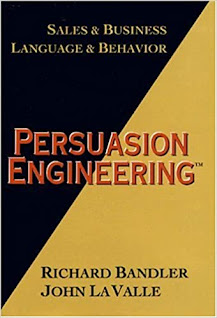
It's not just what you say, but the way you say it. You know that. But when you want to say it a different way, what should you change? In the following quote from the book, Persuasion Engineering, the authors give you a very different idea for how to gain rapport with those you're trying to influence:

People understand words at the same rate that they speak them.

Have you ever thought of that? So one of the things you can do when you're in a conversation with someone about Islam is pay attention to the speed at which they talk, and make sure you talk at the same speed. This is their speed, and you will have the greatest chance of reaching them if you speak at their speed.

To go to a little more sophisticated level of gaining rapport, check this out, paraphrased from the same book:

One of the most important "rapport skills" you can learn is to listen to their intonation patterns and listen to the predicates they use. Do they use a lot of picture words or a lot of feeling words or a lot of hearing words? The whole sentence counts.

For example, "Well, it looks like a good opportunity but I feel I'm not ready for it."

This sentence tells you something about the sequence of how information is processed by this person. First they look (visual) and then they check their feelings (kinesthetic). There is no right or wrong in this. There is no good or bad. People process information in many different ways. Listen to the intonation. Listen to the sequence of their predicates. They will indicate how you should talk to them to have the best chance of getting through. Read more about that here.

Sometimes people use nothing but visual words. They'll say "I'm looking for a new stereo. I could see how it would help us have great evenings together." With this kind of person, it almost doesn't matter what the stereo sounds like. If you want to sell him a stereo, you're going to have to show him.

If someone is visually oriented, you will more successfully reach them if you speak in a way that is visually oriented too. Or sound-oriented, or feeling-oriented. Whatever they are.

Speak at the rate they speak. Speak with the same kinds of intonations. And speak to their primary sensory system. Do these things and your ability to get your message to penetrate will greatly improve.

Learn more about speaking to their sensory system.

Citizen Warrior is the author of the book, Getting Through: How to Talk to Non-Muslims About the Disturbing Nature of Islam and also writes for Inquiry Into Islam, History is Fascinating, and Foundation for Coexistence. Subscribe to Citizen Warrior updates here. You can send an email to CW here.

Read more...

Article Spotlight

One of the most unusual articles on CitizenWarrior.com is Pleasantville and Islamic Supremacism.

It illustrates the Islamic Supremacist vision by showing the similarity between what happened in the movie, Pleasantville, and what devout fundamentalist Muslims are trying to create in Islamic states like Syria, Pakistan, or Saudi Arabia (and ultimately everywhere in the world).

Click here to read the article.


Copyright

All writing on CitizenWarrior.com is copyright © CitizenWarrior.com 2001-2099, all rights reserved.

  © Free Blogger Templates Columnus by Ourblogtemplates.com 2008

Back to TOP