Showing posts with label Islam 101. Show all posts

Taqiyya — Religious Deception

Saturday

The following is a chapter of Islam 101:

Due to the state of war between dar al-Islam and dar al-harb, ruses of war, i.e., systematic lying to the infidel, must be considered part and parcel of Islamic tactics. The parroting by Muslim organizations throughout dar al-harb that "Islam is a religion of peace," or that the origins of Muslim violence lie in the unbalanced psyches of particular individual "fanatics," must be considered as disinformation intended to induce the infidel world to let down its guard.

Of course, individual Muslims may genuinely regard their religion as "peaceful" — but only insofar as they are ignorant of its true teachings, or in the sense of the Egyptian theorist Sayyid Qutb, who posited in his Islam and Universal Peace that true peace would prevail in the world just as soon as Islam had conquered it.

A telling point is that, while Muslims who present their religion as peaceful abound throughout dar al-harb, they are nearly non-existent in dar al-Islam. A Muslim apostate once suggested to me a litmus test for Westerners who believe that Islam is a religion of "peace" and "tolerance": try making that point on a street corner in Ramallah, or Riyadh, or Islamabad, or anywhere in the Muslim world. He assured me you wouldn't live five minutes.

{A} problem concerning law and order {with respect to Muslims in dar al-harb} arises from an ancient Islamic legal principle — that of taqiyya, a word the root meaning of which is "to remain faithful" but which in effect means "dissimulation." It has full Quranic authority (3:28 and 16:106) and allows the Muslim to conform outwardly to the requirements of unislamic or non-Islamic government, while inwardly "remaining faithful" to whatever he conceives to be proper Islam, while waiting for the tide to turn. (Hiskett, Some to Mecca Turn to Pray, 101.)

Volume 4, Book 52, Number 269; Narrated Jabir bin 'Abdullah: The Prophet said, "War is deceit."


Historically, examples of taqiyya include permission to renounce Islam itself in order to save one's neck or ingratiate oneself with an enemy.

It is not hard to see that the implications of taqiyya are insidious in the extreme: they essentially render negotiated settlement — and, indeed, all veracious communication between dar al-Islam and dar al-harb — impossible. It should not, however, be surprising that a party to a war should seek to mislead the other about its means and intentions.

Jihad Watch's Hugh Fitzgerald sums up taqiyya and kitman, a related form of deception.

"Taqiyya" is the religiously-sanctioned doctrine, with its origins in Shi'a Islam but now practiced by non-Shi'a as well, of deliberate dissimulation about religious matters that may be undertaken to protect Islam, and the Believers. A related term, of broader application, is "kitman," which is defined as "mental reservation." An example of "Taqiyya" would be the insistence of a Muslim apologist that "of course" there is freedom of conscience in Islam, and then quoting that Qur'anic verse — "There shall be no compulsion in religion." {2:256} But the impression given will be false, for there has been no mention of the Muslim doctrine of abrogation, or naskh, whereby such an early verse as that about "no compulsion in religion" has been canceled out by later, far more intolerant and malevolent verses. In any case, history shows that within Islam there is, and always has been, "compulsion in religion" for Muslims, and for non-Muslims.

"Kitman" is close to "taqiyya," but rather than outright dissimulation, it consists in telling only a part of the truth, with "mental reservation" justifying the omission of the rest. One example may suffice. When a Muslim maintains that "jihad" really means "a spiritual struggle," and fails to add that this definition is a recent one in Islam (little more than a century old), he misleads by holding back, and is practicing "kitman."

When he adduces, in support of this doubtful proposition, the hadith in which Muhammad, returning home from one of his many battles, is reported to have said (as known from a chain of transmitters, or isnad), that he had returned from "the Lesser Jihad to the Greater Jihad" and does not add what he also knows to be true, that this is a "weak" hadith, regarded by the most-respected muhaddithin as of doubtful authenticity, he is further practicing "kitman."


In times when the greater strength of dar al-harb necessitates that the jihad take an indirect approach, the natural attitude of a Muslim to the infidel world must be one of deception and omission.

Revealing frankly the ultimate goal of dar al-Islam to conquer and plunder dar al-harb when the latter holds the military trump cards would be strategic idiocy.

Fortunately for the jihadists, most infidels do not understand how one is to read the Quran, nor do they trouble themselves to find out what Muhammad actually did and taught, which makes it easy to give the impression through selective quotations and omissions that "Islam is a religion of peace."

Any infidel who wants to believe such fiction will happily persist in his mistake having been cited a handful of Meccan verses and told that Muhammad was a man of great piety and charity. Digging only slightly deeper is sufficient to dispel the falsehood.

Read about the Islamic doctrine that supports taqiyya.

Read a good example of taqiyya.

Read Bill Warner's, The Doctrine of Deceit.

Watch a good video on taqiyya.

Read an extensive article by Islam Watch entitled, Understanding Taqiyya ― Islamic Principle of Lying for the Sake of Allah.

Return to the Table of Contents of Islam 101


See a Glossary Of Islamic Terms for definitions. Islam 101 was written by Gregory M. Davis, author of Religion of Peace?: Islam's War Against the World, and the producer/director of Islam: What the West Needs to Know.

Read more...

Sharia Law

Friday

The following is a chapter of Islam 101:

Unlike many religions, Islam includes a mandatory and highly specific legal and political plan for society called Sharia, which translates approximately as "way" or "path."

The precepts of Sharia are derived from the commandments of the Quran and the Sunnah (the teachings and precedents of Muhammad as found in the reliable hadiths and the Sira). Together, the Quran and the Sunnah establish the dictates of Sharia, which is the blueprint for the good Islamic society.

Because Sharia originates with the Quran and the Sunnah, it is not optional. Sharia is the legal code ordained by Allah for all mankind. To violate Sharia or not to accept its authority is to commit rebellion against Allah, which Allah's faithful are required to combat.

There is no separation between the religious and the political in Islam; rather Islam and Sharia constitute a comprehensive means of ordering society at every level. While it is in theory possible for an Islamic society to have different outward forms — an elective system of government, a hereditary monarchy, etc. — whatever the outward structure of the government, Sharia is the prescribed content. It is this fact that puts Sharia into conflict with forms of government based on anything other than the Quran and the Sunnah.

The precepts of Sharia may be divided into two parts:

1. Acts of worship (al-ibadat), which include:

Ritual Purification (Wudu)
Prayers (Salah)
Fasts (Sawm and Ramadan)
Charity (Zakat)
Pilgrimage to Mecca (Hajj)

2. Human interaction (al-muamalat), which include:
Financial transactions
Endowments
Laws of inheritance
Marriage, divorce, and child care
Food and drink (including ritual slaughtering and hunting)
Penal punishments
War and peace
Judicial matters (including witnesses and forms of evidence)

As one may see, there are few aspects of life that Sharia does not specifically govern. Everything from washing one's hands to child-rearing to taxation to military policy fall under its dictates.

Because Sharia is derivate of the Quran and the Sunnah, it affords some room for interpretation.

But upon examination of the Islamic sources, it is apparent that any meaningful application of Sharia is going to look very different from anything resembling a free or open society in the Western sense. The stoning of adulterers, execution of apostates and blasphemers, repression of other religions, and a mandatory hostility toward non-Islamic nations punctuated by regular warfare will be the norm.

It seems fair then to classify Islam and its Sharia code as a form of totalitarianism.

[ return to the Table of Contents of Islam 101 ]

See a Glossary Of Islamic Terms for definitions.

Islam 101 was written by Gregory M. Davis, author of Religion of Peace?: Islam's War Against the World, and the producer/director of Islam: What the West Needs to Know.

Read more about Sharia Law here:
Islamic Sharia Law in Brief
A Short Overview of Sharia

Read more...

Is it Fair to Paint All Islamic Schools of Thought as Violent?

The following is a chapter of Islam 101:

Islamic apologists often point out that Islam is not a monolith and that there are differences of opinion among the different Islamic schools of thought. That is true, but, while there are differences, there are also common elements.

Just as Orthodox, Roman Catholic, and Protestant Christians differ on many aspects of Christianity, still they accept important common elements. So it is with Islam. One of the common elements to all Islamic schools of thought is jihad, understood as the obligation of the Ummah (the global Muslim community; the body of Muslim faithful) to conquer and subdue the world in the name of Allah and rule it under Sharia law.

The four Sunni Madhhabs (schools of fiqh [Islamic religious jurisprudence]) — Hanafi, Maliki, Shafi'i, and Hanbali — all agree that there is a collective obligation on Muslims to make war on the rest of the world.

Furthermore, even the schools of thought outside Sunni orthodoxy, including Sufism and the Jafari (Shia) school, agree on the necessity of jihad.

When it comes to matters of jihad, the different schools disagree on such questions as whether infidels must first be asked to convert to Islam before hostilities may begin (Osama bin Laden asked America to convert before Al-Qaeda's attacks); how plunder should be distributed among victorious jihadists; whether a long-term Fabian strategy against dar al-harb is preferable to an all-out frontal attack; etc.


Islam 101 was written by Gregory M. Davis, author of Religion of Peace?: Islam's War Against the World, and the producer/director of Islam: What the West Needs to Know.

Read more...

What About The Great Achievements Of Islamic Civilization Through History?

Saturday

The following is a chapter of Islam 101:

Islamic achievements in the fields of art, literature, science, medicine, etc. in no way refute the fact that Islam is intrinsically violent. Roman and Greek civilizations produced many great achievements in these fields as well, but also cultivated powerful traditions of violence.

While giving the world the brilliance of Virgil and Horace, Rome was also a home to gladiatorial combat, the slaughter of Christians, and, at times, rampant militarism.

Furthermore, the achievements of Islamic civilization are pretty modest given its 1300 year history when compared to Western, Hindu, or Confucian civilizations. Many Islamic achievements were in fact the result of non-Muslims living within the Islamic Empire or of recent converts to Islam.

One of the greatest Islamic thinkers, Averroes, ran afoul of Islamic orthodoxy through his study of non-Islamic (Greek) philosophy and his preference for Western modes of thought. Once the dhimmi populations of the Islamic Empire dwindled toward the middle of the second millennium AD, Islam began its social and cultural "decline."

[ return to the Table of Contents of Islam 101 ]

Islam 101 was written by Gregory M. Davis, author of Religion of Peace?: Islam's War Against the World, and the producer/director of Islam: What the West Needs to Know.

Read more...
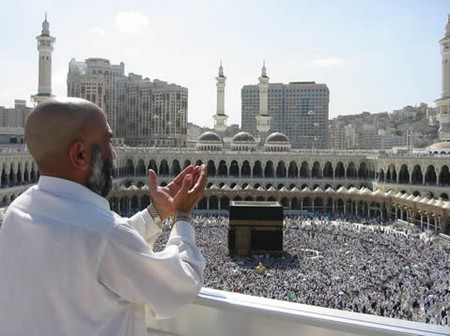
How Can a Violent Political Ideology Be The Second-Largest And Fastest-Growing Religion On Earth?

The following is one chapter of Islam 101:

It should not be surprising that a violent political ideology is proving so attractive to much of the world. The attractive power of fascist ideas has been proven through history.

Islam combines the interior comfort provided by religious faith with the outward power of a world-transforming political ideology. Like the revolutionary violence of Communism, jihad offers an altruistic justification for waging death and destruction. Such an ideology will naturally draw to it violent-minded people while encouraging the non-violent to take up arms themselves or support violence indirectly.

Because something is popular hardly makes it benign.

Furthermore, the areas in which Islam is growing most rapidly, such as Western Europe, have been largely denuded of their religious and cultural heritage, which leaves Islam as the only vibrant ideology available to those in search of meaning.


Islam 101 was written by Gregory M. Davis, author of Religion of Peace?: Islam's War Against the World, and the producer/director of Islam: What the West Needs to Know.

Read more...

Could An Islamic "Reformation" Pacify Islam?

The following is one chapter of Islam 101:

As should be plain to anyone who has examined the Islamic sources, to take the violence out of Islam would require it to jettison two things: the Quran as the word of Allah and Muhammad as Allah's prophet.

In other words, to pacify Islam would require its transformation into something that it is not.

The Western Christian Reformation, that is often used as an example, was an attempt (successful or not) to recover the essence of Christianity, namely, the example and teachings of Christ and the Apostles.

Trying to get back to the example of Muhammad would have very different consequences. Indeed, one may say that Islam is today going through its "Reformation" with the increasing jihadist activity around the globe.

Today, Muslims of the Salafi ("early generations") school are doing exactly that in focusing on the life of Muhammad and his early successors. These reformers are known to their detractors by the derogative term Wahhabi. Drawing their inspiration from Muhammad and the Quran, they are invariably disposed to violence.

The unhappy fact is that Islam today is what it has been for fourteen centuries: violent, intolerant, and expansionary. It is folly to think that we, in the course of a few years or decades, are going to be able to change the basic world outlook of a foreign civilization.

Islam's violent nature must be accepted as given; only then will we be able to come up with appropriate policy responses that can improve our chances of survival.


Islam 101 was written by Gregory M. Davis, author of Religion of Peace?: Islam's War Against the World, and the producer/director of Islam: What the West Needs to Know.

Read more...

What About The Violent Passages In The Bible?

The following is a chapter of Islam 101:

First, violent Biblical passages are irrelevant to the question of whether Islam is violent.

Second, the violent passages in the Bible certainly do not amount to a standing order to commit violence against the rest of the world.

Unlike the Quran, the Bible is a huge collection of documents written by different people at different times in different contexts, which allows for much greater interpretative freedom.

The Quran, on the other hand, comes exclusively from one source: Muhammad. It is through the life of Muhammad that the Quran must be understood, as the Quran itself says. His wars and killings both reflect and inform the meaning of the Quran.

Furthermore, the strict literalism of the Quran means that there is no room for interpretation when it comes to its violent injunctions. As it is through the example of Christ, the "Prince of Peace," that Christianity interprets its scriptures, so it is through the example of the warlord and despot Muhammad that Muslims understand the Quran.


[ return to the Table of Contents of Islam 101 ]

Editor's note: The language of the Quran is open-ended and for all time,
whereas the violence in the Bible is specific to place and time.
Read more about that here.

Read more comparisons between Islam and Christianity.

Islam 101 was written by Gregory M. Davis, author of Religion of Peace?: Islam's War Against the World, and the producer/director of Islam: What the West Needs to Know.

Read more...

Glossary Of Terms (for Islam 101)


The following is one chapter of Islam 101:

Allah: "God"; Arabic Christians also worship "Allah," but an Allah of a very different sort.

Allahu Akhbar: "God is Great (-est)"; term of praise; war cry of Muslims.

AH: "after Hijra"; the Islamic calendar's system of dating; employs lunar rather than solar years; as of January 2007, we are in AH 1428.

Ansar: "aiders" or "helpers"; Arabian tribesmen allied with Muhammad and the early Muslims.

Badr: first significant battle fought by Muhammad and the Muslims against the Quraish tribe of Mecca.

Caliph: title of the ruler or leader of the Umma (global Muslim community); the head of the former Islamic Empire; the title was abolished by Kemal Attaturk in 1924 following the breakup of the Ottoman Empire and the founding of modern Turkey.

dar al-Islam: "House (Realm) of Islam"; Islamic territory ruled by Sharia law

dar al-harb: "House (Realm) of War": territory ruled by infidels

dar al-sulh: "House (Realm) of Truce": territory ruled by infidels but allied with Islam; territory ruled by Muslims but not under Sharia law

Dhimma: the pact of protection extended to non-slave "People of the Book", usually Jews, Christians, and Zoroastrians, which permitted them to remain nominally free under Muslim rule.

dhimmi: "protected"; people under the protection of the dhimma.

dhimmitude: word coined by historian Bat Ye'or to describe the status of dhimmi peoples

hadith: "report"; any of thousands of episodes from the life of Muhammad transmitted orally until written down in the eighth century AD; sahih (reliable or sound) hadiths are second only to the Quran in authority.

Hijra: "emigration"; Muhammad's flight from Mecca to Medina (Yathrib) in AD 622.

Islam: "submission" or "surrender."

jizya: the poll or head tax prescribed by Sura 9:29 of the Quran to be paid by Christians and Jews in Muslim-held territory.

Kaba: "cube"; the Meccan temple in which numerous pagan idols were housed before Muhammad's conquest of Mecca in AD 632, which is still the most venerated object in Islam; the Kaba's cornerstone, which is believed to have fallen from heaven, is the stone on which Abraham was to sacrifice his son, Ishmael (not Isaac).

Mecca: holiest city of Islam; place of Muhammad's birth in AD 570; its Great Mosque contains the Kaba stone; early period in Muhammad's life where more peaceful verses of the Quran were revealed; site of Muhammad's victory over the Quraish in AD 630.

Medina: "city," short for "city of the Prophet"; second holiest city of Islam; destination of Muhammad's Hijra (emigration) in AD 622; later period in Muhammad's life where more violent verses of the Quran were revealed; site of third major battle fought by Muhammad against the Quraish tribe from Mecca; formerly called Yathrib.

Muhammad: "the praised one."

Muslim: one who submits.

Quran (Kuran, Quran, etc.): "recitation"; according to Islam, the compiled verbatim words of Allah as dictated by Muhammad.

razzia: "raid"; acts of piracy on land or sea by Muslims against infidels

Sira: "life"; abbreviation of Sirat Rasul Allah, or "Life of the Prophet of God"; the canonical biography of the Prophet Muhammad written in the eighth century by Ibn Ishaq and later edited by Ibn Hisham; modern translation by Alfred Guillaume.

Sunnah: the "Way" of the Prophet Muhammad; includes his teachings, traditions, and example.

Sura: a chapter of the Quran; Quranic passages are cited as "Sura number:verse" number, e.g., 9:5.

Uhud: second major battle fought by Muhammad against the Quraish tribe of Mecca.

Umar: second "rightly-guided" Caliph; ruled AD 634-644, succeeded Abu Bakr; conquered the Holy Land.

Umma (ummah): the global Muslim community; the body of Muslim faithful.

Uthman: third "rightly-guided" Caliph; ruled AD 644-656, succeeded Umar; compiled the Quran in book form.

Yathrib: city to which Muhammad made the Hijra (emigration) in AD 622/AH 1; renamed Medina.

[ return to the Table of Contents of Islam 101 ]

Islam 101 was written by Gregory M. Davis, author of Religion of Peace?: Islam's War Against the World, and the producer/director of Islam: What the West Needs to Know.

Read more...

Conclusion (for Islam 101)

The following is the conclusion of Islam 101:

THE CHIEF BARRIER today to a better understanding of Islam — apart, perhaps, from outright fear — is sloppy language. Let us take, to start with, the much-vaunted "war on terror." Upon scrutiny, the phrase "war on terror" makes as much sense as a war on "blitzkrieg," "bullets," or "strategic bombing."

The "war on terror" implies that it is perfectly fine if the enemy seeks to destroy us — and, indeed, succeeds in doing so — as long as he does not employ "terror" in the process.

"Terrorism," it should be obvious, is a tactic or stratagem used to advance a goal; it is the goal of Islamic terrorism that we must come to understand, and this logically requires an understanding of Islam.

As we have seen, contrary to the widespread insistence that true Islam is pacific even if a handful of its adherents are violent, the Islamic sources make clear that engaging in violence against non-Muslims is a central and indispensable principle to Islam.

Islam is less a personal faith than a political ideology that exists in a fundamental and permanent state of war with non-Islamic civilizations, cultures, and individuals.

The Islamic holy texts outline a social, governmental, and economic system for all mankind. Those cultures and individuals who do not submit to Islamic governance exist in an ipso facto state of rebellion with Allah and must be forcibly brought into submission. The misbegotten term "Islamo-fascism" is wholly redundant: Islam itself is a kind of fascism that achieves its full and proper form only when it assumes the powers of the state.

The spectacular acts of Islamic terrorism in the late 20th and early 21st centuries are but the most recent manifestation of a global war of conquest that Islam has been waging since the days of the Prophet Muhammad in the 7th Century AD and that continues apace today. This is the simple, glaring truth that is staring the world today in the face — and which has stared it in the face numerous times in the past — but which it seems few today are willing to contemplate.

It is important to realize that we have been talking about Islam — not Islamic "fundamentalism," "extremism," "fanaticism," "Islamo-fascism," or "Islamism," but Islam proper, Islam in its orthodox form as it has been understood and practiced by right-believing Muslims from the time of Muhammad to the present.

The mounting episodes of Islamic terrorism in the late 20th and early 21st centuries are due largely to the geostrategic changes following the end of the Cold War and the growing technical options available to terrorists.

With the collapse of Soviet hegemony over much of the Muslim world, coupled with the burgeoning wealth of the Muslim oil-producing countries, the Muslim world increasingly possesses the freedom and means to support jihad around the globe.

In short, the reason that Muslims are once again waging war against the non-Muslim world is because they can.

It is paramount to note, however, that, even if no major terrorist attack ever occurs on Western soil again, Islam still poses a mortal danger to the West. A halt to terrorism would simply mean a change in Islam’s tactics — perhaps indicating a longer-term approach that would allow Muslim immigration and higher birth rates to bring Islam closer to victory before the next round of violence.

It cannot be overemphasized that Muslim terrorism is a symptom of Islam that may increase or decrease in intensity while Islam proper remains permanently hostile.

Muhammad Taqi Partovi Samzevari, in his “Future of the Islamic Movement” (1986), sums up the Islamic worldview.

Our own Prophet … was a general, a statesman, an administrator, an economist, a jurist and a first-class manager all in one. … In the Qur’an’s historic vision Allah’s support and the revolutionary struggle of the people must come together, so that Satanic rulers are brought down and put to death.

A people that is not prepared to kill and to die in order to create a just society cannot expect any support from Allah. The Almighty has promised us that the day will come when the whole of mankind will live united under the banner of Islam, when the sign of the Crescent, the symbol of Muhammad, will be supreme everywhere. …

But that day must be hastened through our Jihad, through our readiness to offer our lives and to shed the unclean blood of those who do not see the light brought from the Heavens by Muhammad in his mi’raj {“nocturnal voyages to the ‘court’ of Allah”} …

It is Allah who puts the gun in our hand. But we cannot expect Him to pull the trigger as well simply because we are faint-hearted.

It must be emphasized that all of the analysis provided here derives from the Islamic sources themselves and is not the product of critical Western scholarship. (Indeed, most modern Western scholarship of Islam is hardly “critical” in any meaningful sense.) It is Islam’s self-interpretation that necessitates and glorifies violence, not any foreign interpretation of it.


Islam 101 was written by Gregory M. Davis, author of Religion of Peace?: Islam's War Against the World, and the producer/director of Islam: What the West Needs to Know.

Read more...

If Islam Is Violent, Why Are So Many Muslims Peaceful?

The following is a chapter of Islam 101:

This question is a bit like asking, "If Christianity teaches humility, tolerance, and forgiveness, why are so many Christians arrogant, intolerant, and vindictive?" The answer in both cases is obvious: in any religion or ideology there will be many who profess, but do not practice, its tenets.

Just as it is often easier for a Christian to hit back, play holier-than-thou, or disdain others, so it is often easier for a Muslim to stay at home rather than embark on jihad. Hypocrites are everywhere.

Furthermore, there are also people who do not really understand their own faith and so act outside of its prescribed boundaries.

In Islam, there are likely many Muslims who do not really understand their religion thanks to the importance of reciting the Quran in Arabic but not having to understand it. It is the words and sounds of the Quran that attract Allah's merciful attention rather than Quranic knowledge on the part of the supplicant.

Especially in the West, Muslims here are more likely to be attracted by Western ways (which explains why they are here) and less likely to act violently against the society to which they may have fled from an Islamic tyranny abroad.

However, in any given social context, as Islam takes greater root — increasing numbers of followers, the construction of more mosques and "cultural centers," etc. — the greater the likelihood that some number of its adherents will take its violent precepts seriously. This is the problem that the West faces today.


Islam 101 was written by Gregory M. Davis, author of Religion of Peace?: Islam's War Against the World, and the producer/director of Islam: What the West Needs to Know.

Read more...

What About The Crusades?


The following is a chapter of Islam 101:

The obvious response to this question is, "Well, what about them?" Violence committed in the name of other religions is logically unconnected to the question of whether Islam is violent. But, by mentioning the Crusades, the hope of the Islamic apologist is to draw attention away from Islamic violence and paint religions in general as morally equivalent.

In both the Western academia and media as well as in the Islamic world, the Crusades are viewed as wars of aggression fought by bloody-minded Christians against peaceful Muslims.

While the Crusades were certainly bloody, they are more accurately understood as a belated Western response to centuries of jihad than as an unprovoked, unilateral attack.

Muslim rule in the Holy Land began in the second half of the 7th century during the Arab wave of jihad with the conquests of Damascus and Jerusalem by the second "rightly-guided Caliph," Umar. After the initial bloody jihad, Christian and Jewish life there was tolerated within the strictures of the dhimma and the Muslim Arabs generally permitted Christians abroad to continue to make pilgrimage to their holy sites, a practice which proved lucrative for the Muslim state.

In the 11th century, the relatively benign Arab administration of the Holy Land was replaced with that of Seljuk Turks, due to civil war in the Islamic Empire. Throughout the latter half of the 11th century, the Turks waged war against the Christian Byzantine Empire and pushed it back from its strongholds in Antioch and Anatolia (now Turkey). In 1071, Byzantine forces suffered a crushing defeat at the Battle of Manzikert in what is now Eastern Turkey.

The Turks resumed the jihad in the Holy Land, abusing, robbing, enslaving, and killing Christians there and throughout Asia Minor. They threatened to cut off Christendom from its holiest site, the Church of the Holy Sepulchre in Jerusalem, rebuilt under Byzantine stewardship after it was destroyed by Caliph Al-Hakim bi-Amr Allah in 1009.

It was in this context of a renewed jihad in the Middle East that the Roman Pope, Urban II, issued a call in 1095 for Western Christians to come to the aid of their Eastern cousins (and seems to have harbored the hope of claiming Jerusalem for the Papacy after the Great Schism with Eastern Christianity in 1054).

This "armed pilgrimage," in which numerous civilians as well as soldiers took part, would eventually become known years later as the First Crusade.

The idea of a "crusade" as we now understand that term, i.e., a Christian "holy war," developed years later with the rise of such organizations as the Knights Templar that made "crusading" a way of life.

It worth noting that the most ardent Crusaders, the Franks, were exactly those who had faced jihad and razzias (raids) for centuries along the Franco-Spanish border and knew better than most the horrors to which Muslims subjected Christians.

At the time of the First Crusade, the populations of Asia Minor, Syria, and Palestine, though ruled by Muslims, were still overwhelmingly Christian. The "Crusading" campaigns of the Western Christian armies were justified at the time as a war liberating the Eastern Christians, whose population, lands, and culture had been devastated by centuries of jihad and dhimmitude. Conquering territory for God in the mode of jihad was an alien idea to Christianity and it should not be surprising that it (Christian holy war) eventually died out in the West and never gained ascendancy in the East.

Following the very bloody capture of Jerusalem in 1099 by the Latin armies and the establishment of the Crusader States in Edessa, Antioch, and Jerusalem, the Muslim and Christian forces fought a see-saw series of wars, in which both parties were guilty of the usual gamut of wartime immorality.

Over time, even with reinforcing Crusades waged from Europe, the Crusader States, strung out on precarious lines of communication, slowly succumbed to superior Muslim power.

In 1271, the last Christian citadel, Antioch, fell to the Muslims.

No longer having to divert forces to subdue the Christian beachhead on the Eastern Mediterranean, the Muslims regrouped for a 400-year-long jihad against Southern and Eastern Europe, which twice reached as far as Vienna before it was halted.

In geostrategic terms, the Crusades can be viewed as an attempt by the West to forestall its own destruction at the hands of Islamic jihad by carrying the fight to the enemy. It worked for a while.

Significantly, while the West has for some time now lamented the Crusades as mistaken, there has never been any mention from any serious Islamic authority of regret for the centuries and centuries of jihad and dhimmitude perpetrated against other societies. But this is hardly surprising: while religious violence contradicts the fundamentals of Christianity, religious violence is written into Islam's DNA.


Islam 101 was written by Gregory M. Davis, author of Religion of Peace?: Islam's War Against the World, and the producer/director of Islam: What the West Needs to Know.

Read more...

Frequently Asked Questions (from Islam 101)

The following is from Islam 101:

There are a handful of questions that invariably arise when the point is made that Islam is violent. These questions for the most part are misleading or irrelevant and do not contest the actual evidence or arguments that violence is inherent to Islam. Nonetheless, they have proven rhetorically effective in deflecting serious scrutiny from Islam, and so I deal with some of them here.

a) What about the Crusades?

b) If Islam is violent, why are so many Muslims peaceful?

c) What about the violent passages in the Bible?

d) Could an Islamic "Reformation" pacify Islam?

e) What about the history of Western colonialism in the Islamic world?

f) How can a violent political ideology be the second-largest and fastest-growing religion on earth?

g) Is it fair to paint all Islamic schools of thought as violent?

h) What about the great achievements of Islamic civilization?


See a Glossary Of Islamic Terms for definitions.

Islam 101 was written by Gregory M. Davis, author of Religion of Peace?: Islam's War Against the World, and the producer/director of Islam: What the West Needs to Know.

Read more...

Jihad in the Modern Era

Friday

The following is one chapter of Islam 101: FOLLOWING ITS DEFEAT at the walls of Vienna in 1683, Islam entered a period of strategic decline in which it was increasingly dominated by the rising European colonial powers. Due to its material weakness vis-à-vis the West, dar al-Islam was unable to prosecute large-scale military campaigns into infidel territory. The Islamic Empire, then ruled by the Ottoman Turks, was reduced to fending of the increasingly predatory European powers. In 1856, Western pressure compelled the Ottoman government to suspend the dhimma under which the Empire's non-Muslim subjects labored. This provided hitherto unknown opportunities for social and personal improvement by the former dhimmis, but it also fomented resentment by orthodox Muslims who saw this as a violation of the Sharia and their Allah-given superiority over unbelievers. By the late 19th century, tensions among the European subjects of the Empire broke out into the open when the Ottoman government massacred 30,000 Bulgarians in 1876 for allegedly rebelling against Ottoman rule. Following Western intervention that resulted in Bulgarian independence, the Ottoman government and its Muslim subjects were increasingly nervous about other non-Muslim groups seeking independence. It was in this atmosphere that the first stage of the Armenian genocide took place in 1896 with the slaughter of some 250,000 Armenians. Both civilians and military personnel took place in the massacres. Peter Balakian, in his book, The Burning Tigris: The Armenian Genocide and America's Response, documents the whole horrific story. But the massacres of the 1890s were only the prelude to the much larger holocaust of 1915, which claimed some 1.5 million lives. While various factors contributed to the slaughter, there is no mistaking that the massacres were nothing other than a jihad waged against the Armenians, no longer protected as they were by the dhimma. In 1914, as the Ottoman Empire entered World War I on the side of the central powers, an official anti-Christian jihad was proclaimed. To promote the idea of jihad, the sheikh-ul-Islam’s {the most senior religious leader in the Ottoman Empire} published proclamation summoned the Muslim world to arise and massacre its Christian oppressors. “Oh Moslems,” the document read, “Ye who are smitten with happiness and are on the verge of sacrificing your life and your good for the cause of right, and of braving perils, gather now around the Imperial throne.” In the Ikdam, the Turkish newspaper that had just passed into German ownership, the idea of jihad was underscored: “The deeds of our enemies have brought down the wrath of God. A gleam of hope has appeared. All Mohammedans, young and old, men, women, and children must fulfill their duty. … If we do it, the deliverance of the subjected Mohammedan kingdoms is assured.” … “He who kills even one unbeliever,” one pamphlet read, “of those who rule over us, whether he does it secretly or openly, shall be rewarded by God.” (quoted in Balakian, The Burning Tigris, 169-70.) The anti-Christian jihad culminated in 1922 at Smyrna, on the Mediterranean coast, where 150,000 Greek Christians were massacred by the Turkish army under the indifferent eye of Allied warships. All in, from 1896-1923, some 2.5 million Christians were killed, the first modern genocide, which to this day is denied by the Turkish government. Since the breakup of the Islamic Empire following World War I, various jihads have been fought around the globe by the independent Muslim nations and sub-state jihadist groups. The most sustained effort has been directed against Israel, which has committed the unpardonable sin of rebuilding dar al-harb on land formerly a part of dar al-Islam. Other prominent jihads include that fought against the Soviets in Afghanistan, the Muslim Bosnians against the Serbs in the former Yugoslavia, the Muslim Albanians against the Serbs in Kosovo, and the Chechens against the Russians in the Caucasus. Jihads have also been waged throughout northern Africa, the Philippines, Thailand, Kashmir, and a host of other places throughout the world. In addition, the overwhelming majority of terrorist attacks around the world have been committed by Muslims, including, of course, the spectacular attacks of 9/11/01 (USA), 3/11/04 (Spain), and 7/7/05 (UK). (For a more comprehensive list of Muslim attacks, visit www.thereligionofpeace.com.) The fact is, the percentage of conflicts in the world today that do not include Islam is pretty small. Islam is making a comeback.

Islam 101 was written by Gregory M. Davis, author of Religion of Peace?: Islam's War Against the World, and the producer/director of Islam: What the West Needs to Know.

Read more...

The Dhimma


The following is a chapter of Islam 101:


Islam's persecution of non-Muslims is in no way limited to jihad, even though that is the basic relationship between the Muslim and non-Muslim world. After the jihad concludes in a given area with the conquest of infidel territory, the dhimma, or treaty of protection, may be granted to the conquered "People of the Book" — historically, Jews, Christians, and Zoroastrians.

The dhimma provides that the life and property of the infidel are exempted from jihad for as long as the Muslim rulers permit, which has generally meant for as long as the subject non-Muslims — the dhimmi — prove economically useful to the Islamic state.

The Quran spells out the payment of the jizya (poll- or head-tax; Sura 9:29), which is the most conspicuous means by which the Muslim overlords exploit the dhimmi. But the jizya is not merely economic in its function; it exists also to humiliate the dhimmi and impress on him the superiority of Islam. Al-Maghili, a fifteenth century Muslim theologian, explains:

On the day of payment {of the jizya} they {the dhimmi} shall be assembled in a public place like the suq {place of commerce}. They should be standing there waiting in the lowest and dirtiest place. The acting officials representing the Law shall be placed above them and shall adopt a threatening attitude so that it seems to them, as well as to others, that our object is to degrade them by pretending to take their possessions. They will realize that we are doing them a favor in accepting from them the jizya and letting them go free. (Al-Maghili, quoted in Bat Ye'or, The Decline of Eastern Christianity under Islam, 361.)

Islamic law codifies various other restrictions on the dhimmi, all of which derive from the Quran and the Sunnah. Several hundred years of Islamic thought on the right treatment of dhimmi peoples is summed up by Al-Damanhuri, a seventeenth century head of Al-Azhar University in Cairo, the most prestigious center for learning in the Muslim world:

… just as the dhimmis are prohibited from building churches, other things also are prohibited to them. They must not assist an unbeliever against a Muslim … raise the cross in an Islamic assemblage … display banners on their own holidays; bear arms … or keep them in their homes. Should they do anything of the sort, they must be punished, and the arms seized …

The Companions [of the Prophet] agreed upon these points in order to demonstrate the abasement of the infidel and to protect the weak believer's faith. For if he sees them humbled, he will not be inclined toward their belief, which is not true if he sees them in power, pride, or luxury garb, as all this urges him to esteem them and incline toward them, in view of his own distress and poverty. Yet esteem for the unbeliever is unbelief. (Al-Damanhuri, quoted in Bat Ye'or, The Decline of Eastern Christianity under Islam, 382.)

The Christian, Jewish, and Zoroastrian peoples of the Middle East, North Africa, and much of Europe suffered under the oppressive strictures of the dhimma for centuries. The status of these dhimmi peoples is comparable in many ways to that of former slaves in the post-bellum American South. Forbidden to construct houses of worship or repair extant ones, economically crippled by the jizya, socially humiliated, legally discriminated against, and generally kept in a permanent state of weakness and vulnerability by the Muslim overlords, it should not be surprising that their numbers dwindled, in many places to the point of extinction.

The generally misunderstood decline of Islamic civilization over the past several centuries is easily explained by the demographic decline of the dhimmi populations, which had provided the principle engines of technical and administrative competence.

Should the dhimmi violate the conditions of the dhimma — perhaps through practicing his own religion indiscreetly or failing to show adequate deference to a Muslim — then the jihad resumes.

At various times in Islamic history, dhimmi peoples rose above their subjected status, and this was often the occasion for violent reprisals by Muslim populations who believed them to have violated the terms of the dhimma.

Medieval Andalusia (Moorish Spain) is often pointed out by Muslim apologists as a kind of multicultural wonderland, in which Jews and Christians were permitted by the Islamic government to rise through the ranks of learning and government administration. What we are not told, however, is that this relaxation of the disabilities resulted in widespread rioting on the part of the Muslim populace that killed hundreds of dhimmis, mainly Jews. By refusing to convert to Islam and straying from the traditional constraints of the dhimma (even at the behest of the Islamic government, which was in need of capable manpower), the dhimmi had implicitly chosen the only other option permitted by the Quran: death.

Return to the Table of Contents of Islam 101

Islam 101 was written by Gregory M. Davis, author of Religion of Peace?: Islam's War Against the World, and the producer/director of Islam: What the West Needs to Know.

Read more...

The Second Major Wave of Jihad: the Turks, 1071-1683

Monday

The following is one chapter of Islam 101:

Some twenty-five years before the first Crusading army set out from central Europe for the Holy Land, the Turkish (Ottoman) armies began an assault on the Christian Byzantine Empire, which had ruled what is now Turkey since the Roman Empire's capital was moved to Constantinople in 325 AD.

At the battle of Manzikert, in 1071, the Christian forces suffered a disastrous defeat, which left much of Anatolia (Turkey) open to invasion. This second wave of jihad was temporarily held up by the invading Latin Armies during the Crusades (see Islam 101 FAQs), but, by the beginning of the 14th century, the Turks were threatening Constantinople and Europe itself.

In the West, Roman Catholic armies were bit by bit forcing Muslim forces down the Iberian peninsula, until, in 1492, they were definitively expelled (the Reconquista). In Eastern Europe, however, Islam continued in the ascendant.

One of the most significant engagements between the invading Muslims and the indigenous peoples of the region was the Battle of Kosovo in 1389, where the Turks annihilated a multinational army under the Serbian King, St. Lazar, though their progress into Europe was significantly slowed.

After numerous attempts dating back to the seventh century, Constantinople, the jewel of Eastern Christendom, finally fell in 1453 to the armies of Sultan Mahomet II. Lest one ascribe the atrocities of the first wave of jihad to the "Arabness" of its perpetrators, the Turks showed they were fully capable of living up to the principles of the Quran and the Sunnah.

Paul Fregosi, in his book, Jihad in the West, describes the scene following the final assault on Constantinople:

Several thousand of the survivors had taken refuge in the cathedral: nobles, servants, ordinary citizens, their wives and children, priests and nuns. They locked the huge doors, prayed, and waited. {Caliph} Mahomet {II} had given the troops free quarter. They raped, of course, the nuns being the first victims, and slaughtered.

At least four thousand were killed before Mahomet stopped the massacre at noon. He ordered a muezzin {one who issues the call to prayer} to climb into the pulpit of St. Sophia and dedicate the building to Allah. It has remained a mosque ever since.

Fifty thousand of the inhabitants, more than half the population, were rounded up and taken away as slaves. For months afterward, slaves were the cheapest commodity in the markets of Turkey. Mahomet asked that the body of the dead emperor be brought to him. Some Turkish soldiers found it in a pile of corpses and recognized Constantine {XI} by the golden eagles embroidered on his boots. The sultan ordered his head to be cut off and placed between the horse's legs under the equestrian bronze statue of the emperor Justinian. The head was later embalmed and sent around the chief cities of the Ottoman empire for the delectation of the citizens.

Next, Mahomet ordered the Grand Duke Notaras, who had survived, be brought before him, asked him for the names and addresses of all the leading nobles, officials, and citizens, which Notaras gave him. He had them all arrested and decapitated. He sadistically bought from their owners {i.e., Muslim commanders} high-ranking prisoners who had been enslaved, for the pleasure of having them beheaded in front of him. (Fregosi, Jihad, 256-7.)

This second, Turkish wave of jihad reached its farthest extent at the failed sieges of Vienna in 1529 and 1683, where in the latter instance the Muslim army under Kara Mustapha was thrown back by the Roman Catholics under the command of the Polish King, John Sobieski.

In the decades that followed, the Ottomans were driven back down through the Balkans, though they were never ejected from the European continent entirely. Still, even while the imperial jihad faltered, Muslim land- and sea-borne razzias into Christian territory continued, and Christians were being abducted into slavery from as far away as Ireland into the 19th century.

[ return to the Table of Contents of Islam 101 ]

See a Glossary Of Islamic Terms for definitions.

Islam 101 was written by Gregory M. Davis, author of Religion of Peace?: Islam's War Against the World, and the producer/director of Islam: What the West Needs to Know.

Read more...

The First Major Wave of Jihad: the Arabs, 622-750

The following is one chapter of Islam 101:

Near the end of his life, Muhammad sent letters to the great empires of the Middle East demanding their submission to his authority. This dispels any notion that the Prophet intended Islam's expansion to stop with Arabia. Indeed, it is only logical that the one true religion, revealed by the final and fullest prophet, should have universal sway.

Thus, as Muhammad had fought and subdued the peoples of the Arabian peninsula, his successors Abu Bakr, Umar, Uthman, and Ali (known as "the four rightly-guided Caliphs") and other Caliphs fought and subdued the people of the Middle East, Africa, Asia, and Europe in the name of Allah.

Volume 4, Book 53, Number 386; Narrated Jubair bin Haiya: Umar (the second Caliph) sent the Muslims to the great countries to fight the pagans. "When we reached the land of the enemy, the representative of Khosrau (Persia) came out with forty-thousand warriors, and an interpreter got up saying, "Let one of you talk to me!"

Al-Mughira replied, "Our Prophet, the Messenger of our Lord, has ordered us to fight you till you worship Allah Alone or give Jizya (i.e. tribute); and our Prophet has informed us that our Lord says: "Whoever amongst us is killed (i.e. martyred), shall go to Paradise to lead such a luxurious life as he has never seen, and whoever amongst us remain alive, shall become your master."

Unleashing upon the world the blitzkrieg of its day, Islam rapidly spread into the territories of Byzantium, Persia, and Western Europe in the decades after Muhammad's death.

The creaking Byzantine and Persian powers, having battled each other into mutual decline, offered little resistance to this unanticipated onslaught. The Arab Muslim armies charged into the Holy Land, conquered what is now Iraq and Iran, then swept west across North Africa, into Spain, and finally into France.

The Muslim offensive was finally halted in the West at the Battle of Poitiers/Tours, not far from Paris, in 732 AD. In the east, the jihad penetrated deep into Central Asia.

As Muhammad had plundered his foes, so his successors also stripped the conquered areas — incomparably richer both materially and culturally than the desolate sands of Arabia — of their wealth and manpower.

Almost overnight, the more advanced civilizations of the Middle East, North Africa, Persia, and Iberia saw their agriculture, native religions, and populations destroyed or plundered. Save for a handful of walled cities that managed to negotiate conditional surrenders, the catastrophes those lands suffered were very nearly complete.

Bat Ye'or, the leading scholar of Islam's expansion and its treatment of non-Muslims, has provided an inestimable service through the compilation and translation of numerous primary source documents describing centuries of Islamic conquest. She includes these documents in her works on Islamic history and the plight of non-Muslims under Islamic rule.

In the history of jihad, the slaughter of civilians, the desecration of churches, and the plundering of the countryside are commonplace. Here is Michael the Syrian's account of the Muslim invasion of Cappodocia (southern Turkey) in 650 AD under Caliph Umar:

… when Muawiya {the Muslim commander} arrived (in Euchaita in Armenia) he ordered all the inhabitants to be put to the sword; he placed guards so that no one escaped. After gathering up all the wealth of the town, they set to torturing the leaders to make them show them things [treasures] that had been hidden.

The Taiyaye (Muslim Arabs) led everyone into slavery — men and women, boys and girls — and they committed much debauchery in that unfortunate town: they wickedly committed immoralities inside churches. They returned to their country rejoicing. (Michael the Syrian, quoted in Bat Ye'or, The Decline of Eastern Christianity under Islam, 276-7.)

The following description by the Muslim historian, Ibn al-Athir (1160-1233 AD), of razzias (raiding expeditions) in Northern Spain and France in the eighth and ninth centuries AD, conveys nothing but satisfaction at the extent of the destruction wrought upon the infidels, including noncombatants.

In 177-17, Hisham, prince of Spain, sent a large army commanded by Abd al-Malik b. Abd al-Wahid b. Mugith into enemy territory, and which made forays as far as Narbonne and Jaranda .

This general first attacked Jaranda where there was an elite Frank garrison; he killed the bravest, destroyed the walls and towers of the town and almost managed to seize it. He then marched on to Narbonne, where he repeated the same actions, then, pushing forward, he trampled underfoot the land of the Cerdagne {near Andorra in the Pyrenees}.

For several months he traversed this land in every direction, raping women, killing warriors, destroying fortresses, burning and pillaging everything, driving back the enemy who fled in disorder. He returned safe and sound, dragging behind him God alone knows how much booty. This is one of the most famous expeditions of the Muslims in Spain.

In 223-2, Abd ar-Rahman b. al Hakam, sovereign of Spain, sent an army against Alava; it encamped near Hisn al-Gharat, which it besieged; it seized the booty that was found there, killed the inhabitants and withdrew, carrying off women and children as captives.

In 231-6, a Muslim army advanced into Galicia on the territory of the infidels, where it pillaged and massacred everyone.

In 246-7, Muhammad b. Abd ar-Rahman advanced with many troops and a large military apparatus against the region of Pamplona. He reduced, ruined and ravaged this territory, where he pillaged and sowed death. (Ibn al-Athir, Annals, quoted in Bat Ye'or, The Decline of Eastern Christianity under Islam, 281-2.)

This first wave of jihad engulfed much of the Byzantine, Visigothic, Frankish, and Persian Empires and left the newborn Islamic Empire controlling territory from Southern France, south through Spain, east across North Africa to India, and north to Russia. Early in the second millennium AD, the Mongol invasion from the east greatly weakened the Islamic Empire and ended Arab predominance therein.

[ return to the Table of Contents of Islam 101 ]

Islam 101 was written by Gregory M. Davis, author of Religion of Peace?: Islam's War Against the World, and the producer/director of Islam: What the West Needs to Know.

Read more...

Jihad Through History

The following is a chapter of Islam 101:

In 622 AD (year one in the Islamic calendar), Muhammad abandoned Mecca for the city of Medina some 200 miles farther north in the Arabian peninsula.

In Medina, Muhammad established a paramilitary organization that would spread his influence and that of his religion throughout Arabia.

Because there has never been a separation of the political-military and the religious in Islam, this development was entirely natural by Islamic principles.

By the time of his death in 632 AD, Muhammad had extended his control in a series of raids and battles over most of southern Arabia. The conquered populations of these areas either had to submit to Muslim rule and pay a protection tax or convert to Islam.

The two subheadings for this section are:

i) The First Major Wave of Jihad: the Arabs, 622-750 AD

ii) The Second Major Wave of Jihad: the Turks, 1071-1683 AD

[ return to the Table of Contents of Islam 101 ]

See a Glossary Of Islamic Terms for definitions.

Islam 101 was written by Gregory M. Davis, author of Religion of Peace?: Islam's War Against the World, and the producer/director of Islam: What the West Needs to Know.

Read more...

Dar al-Islam and dar al-harb: the House of Islam and the House of War

The following is a chapter of Islam 101:

The violent injunctions of the Quran and the violent precedents set by Muhammad set the tone for the Islamic view of politics and of world history. Islamic scholarship divides the world into two spheres of influence, the House of Islam (dar al-Islam) and the House of War (dar al-harb).


Islam means submission, and so the House of Islam includes those nations that have submitted to Islamic rule, which is to say those nations ruled by Sharia law. The rest of the world, which has not accepted Sharia law and so is not in a state of submission, exists in a state of rebellion or war with the will of Allah.


It is incumbent on dar al-Islam to make war upon dar al-harb until such time that all nations submit to the will of Allah and accept Sharia law.

Islam's message to the non-Muslim world is the same now as it was in the time of Muhammad and throughout history: submit or be conquered. The only times since Muhammad when dar al-Islam was not actively at war with dar al-harb were when the Muslim world was too weak or divided to make war effectively.
But the lulls in the ongoing war that the House of Islam has declared against the House of War do not indicate a forsaking of jihad as a principle but reflect a change in strategic factors. It is acceptable for Muslim nations to declare hudna, or truce, at times when the infidel nations are too powerful for open warfare to make sense.

Jihad is not a collective suicide pact even while "killing and being killed" (Sura 9:111) is encouraged on an individual level. For the past few hundred years, the Muslim world has been too politically fragmented and technologically inferior to pose a major threat to the West. But that is changing.

 
Islam 101 was written by Gregory M. Davis, author of Religion of Peace?: Islam's War Against the World, and the producer/director of Islam: What the West Needs to Know.

Read more...

The Conquest of Mecca

Sunday

The following is one chapter of Islam 101:

Muhammad's greatest victory came in 632 AD, ten years after he and his followers had been forced to flee to Medina. In that year, he assembled a force of some ten thousand Muslims and allied tribes and descended on Mecca.

"The Apostle had instructed his commanders when they entered Mecca only to fight those who resisted them, except a small number who were to be killed even if they were found beneath the curtains of the Kaba." (Sira, p550)

Volume 3, Book 29, Number 72; Narrated Anas bin Malik: Allah's Apostle entered Mecca in the year of its Conquest wearing an Arabian helmet on his head and when the Prophet took it off, a person came and said, "Ibn Khatal is holding the covering of the Kaba (taking refuge in the Kaba)." The Prophet said, "Kill him."

Following the conquest of Mecca, Muhammad outlined the future of his religion.

Volume 4, Book 52, Number 177; Narrated Abu Huraira: Allah's Apostle said, "The Hour {of the Last Judgment} will not be established until you fight with the Jews, and the stone behind which a Jew will be hiding will say. "O Muslim! There is a Jew hiding behind me, so kill him."

Volume 1, Book 2, Number 24; Narrated Ibn Umar: Allah's Apostle said: "I have been ordered (by Allah) to fight against the people until they testify that none has the right to be worshipped but Allah and that Muhammad is Allah's Apostle, and offer the prayers perfectly and give the obligatory charity, so if they perform that, then they save their lives and property from me except for Islamic laws and then their reckoning (accounts) will be done by Allah."

It is from such warlike pronouncements as these that Islamic scholarship divides the world into dar al-Islam (the House of Islam, i.e., those nations who have submitted to Allah) and dar al-harb (the House of War, i.e., those who have not). It is this dispensation that the world lived under in Muhammad's time and that it lives under today. Then as now, Islam's message to the unbelieving world is the same: submit or be conquered.


Islam 101 was written by Gregory M. Davis, author of Religion of Peace?: Islam's War Against the World, and the producer/director of Islam: What the West Needs to Know.

Read more...

The Battle of Medina

The following is one chapter of Islam 101:

In 627 AD, Muhammad faced the greatest challenge to his new community. In that year, the Quraish of Mecca made their most determined attack on the Muslims at Medina itself.

Muhammad thought it advisable not to engage them in a pitched battle as at Uhud but took shelter in Medina, protected as it was by lava flows on three sides. The Meccans would have to attack from the northwest in a valley between the flows, and it was there that Muhammad ordered a trench dug for the city's defense.

Volume 4, Book 52, Number 208; Narrated Anas: On the day (of the battle) of the Trench, the Ansar {new converts to Islam} were saying, "We are those who have sworn allegiance to Muhammad for Jihad (for ever) as long as we live." The Prophet replied to them, "O Allah! There is no life except the life of the Hereafter. So honor the Ansar and emigrants {from Mecca} with Your Generosity."

And narrated Mujashi: My brother and I came to the Prophet and I requested him to take the pledge of allegiance from us for migration. He said, "Migration has passed away with its people." I asked, "For what will you take the pledge of allegiance from us then?" He said, "I will take (the pledge) for Islam and Jihad."

The Meccans were foiled by the trench and only able to send small raiding parties across it. After several days, they turned back for Mecca.

Following his victory, Muhammad turned to the third Jewish tribe at Medina, the Bani Quraiza. While the Bani Qaynuqa and Bani Nadir had suffered exile, the fate of the Bani Quraiza would be considerably more dire.

Sira, p463-4: Then they {the tribe of Quraiza} surrendered, and the apostle confined them in Medina in the quarter of d. al-Harith, a woman of Bani al-Najjar.

Then the apostle went out to the market of Medina and dug trenches in it. Then he sent for them and struck off their heads in those trenches as they were brought out to him in batches. Among them was the enemy of Allah Huyayy bin Akhtab and Kab bin Asad their chief.

There were 600 or 700 in all, though some put the figure as high as 800 or 900.

As they were being taken out in batches to the Apostle they asked Kab what he thought would be done with them. He replied, "Will you never understand? Don't you see that the summoner never stops and those who are taken away do not return? By Allah it is death!"

This went on until the Apostle made an end of them.

Thus do we find the clear precedent that explains the peculiar penchant of Islamic terrorists to behead their victims: it is merely another precedent bestowed by their Prophet.

Following yet another of the Muslims' raids, this time on a place called Khaibar, "The women of Khaibar were distributed among the Muslims" as was usual practice. (Sira, p511) The raid at Khaibar had been against the Bani Nadir, whom Muhammad had earlier exiled from Medina.

Sira, p515: Kinana bin al-Rabi, who had the custody of the treasure of Bani al-Nadir, was brought to the Apostle who asked him about it. He denied that he knew where it was.

A Jew came to the Apostle and said that he had seen Kinana going round a certain ruin every morning early. When the Apostle said to Kinana, "Do you know that if we find you have it I shall kill you?" he said, Yes.

The Apostle gave orders that the ruin was to be excavated and some of the treasure was found. When he asked him about the rest he refused to produce it, so the Apostle gave orders to al-Zubayr bin al-Awwam, "Torture him until you extract what he has," so he kindled a fire with flint and steel on his chest until he was nearly dead. Then the Apostle delivered him to Muhammad bin Maslama and he struck off his head, in revenge for his brother Mahmud.


Islam 101 was written by Gregory M. Davis, author of Religion of Peace?: Islam's War Against the World, and the producer/director of Islam: What the West Needs to Know.

Read more...

Article Spotlight

One of the most unusual articles on CitizenWarrior.com is Pleasantville and Islamic Supremacism.

It illustrates the Islamic Supremacist vision by showing the similarity between what happened in the movie, Pleasantville, and what devout fundamentalist Muslims are trying to create in Islamic states like Syria, Pakistan, or Saudi Arabia (and ultimately everywhere in the world).

Click here to read the article.


Copyright

All writing on CitizenWarrior.com is copyright © CitizenWarrior.com 2001-2099, all rights reserved.

  © Free Blogger Templates Columnus by Ourblogtemplates.com 2008

Back to TOP